Signature generator: draw or type your signature
Draw your signature with a mouse, trackpad or finger, or type your name and pick a handwriting style. Download it as a transparent PNG for Word, Gmail or a form, and when the document actually matters, apply it in Chaindoc and get a signed file with an audit trail behind it.
Create your signature
Draw it or type it and the transparent PNG for Word, Gmail or a form is made in your browser, where it stays. Or let AI draw one in your Chaindoc account.
Use a mouse, a trackpad or your finger.
Your signature
Your signature

A signature image isn't a signed document
To get a file with an audit trail behind it, sign it in Chaindoc.
Sign a document with itHow to create a signature online
Three steps, about two minutes. The signature lives in your account afterwards, so the next document takes one click rather than another round of drawing.
Open the generator
Sign in to Chaindoc and open your signature settings. Creating and storing a signature is part of the free tier, and nothing installs on your machine.
Draw it or type your name
Draw with a mouse, trackpad or finger, or type your name and choose a handwriting style. Redraw as often as you like until the stroke looks like your own hand.
Download it, or sign
Save it as a transparent PNG for Word, Gmail or a scanned form. Or apply it to a document here and get a signed file with a verifiable trail.

Your signature is one step of the contract it lands on
Chaindoc makes that contract and checks who is signing it. The invoicing sits on the same document, and that is where the client pays as well. None of that needs a second tool.
Take it into ChaindocA signature you can actually use
Most generators hand you a picture and stop there. The picture is the easy half. Still deciding what to draw? Our signature ideas guide covers five styles and a method for building your own.
Drawn or typed
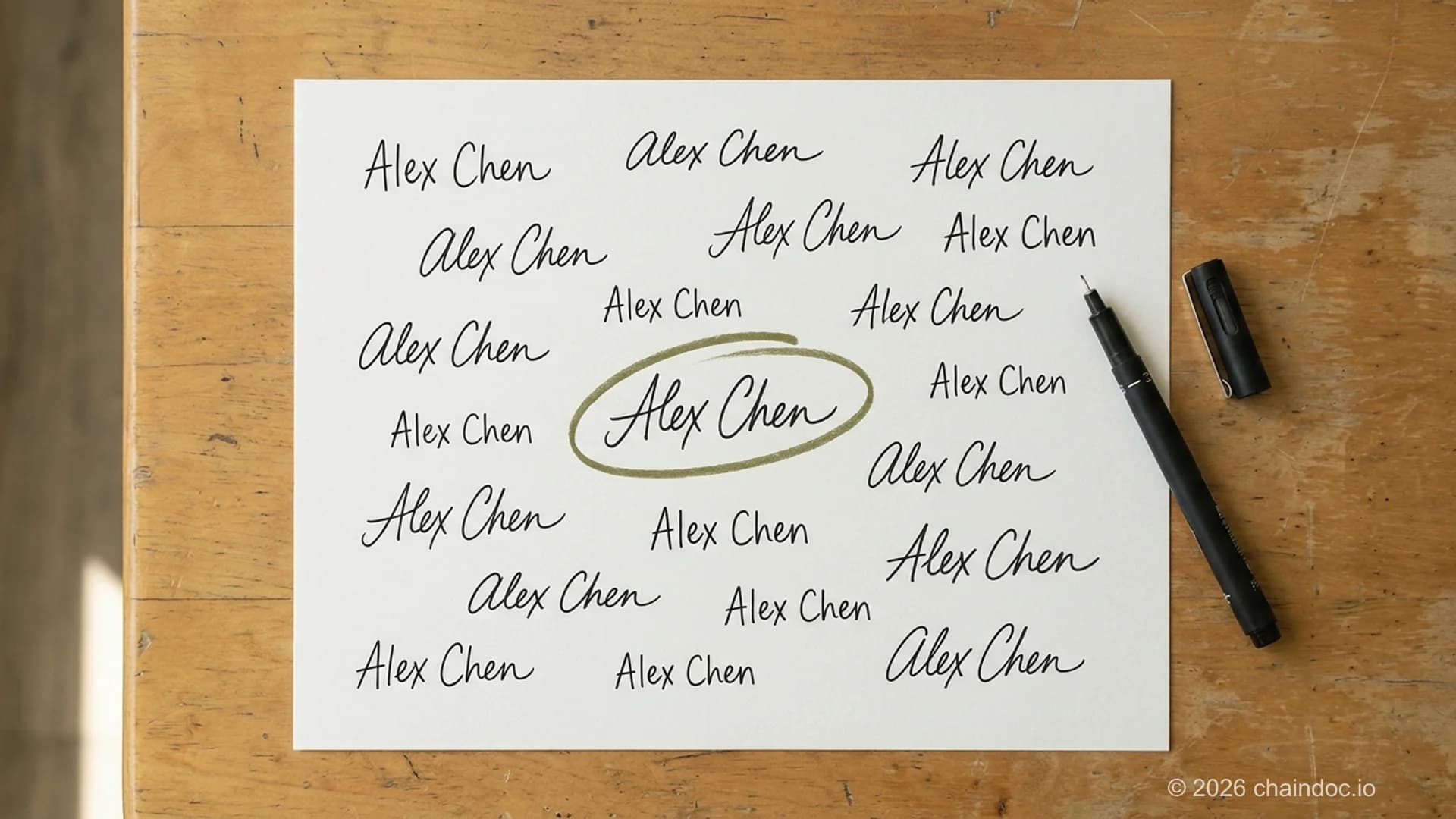
Draw freehand on a canvas, or type your name and pick a handwriting style. Drawn signatures read as personal, typed ones stay legible when the document is scaled down.
Transparent background
What you download is a transparent signature PNG: no white box around it, so it sits on the page instead of covering the text underneath. That one detail is where most generated signatures fall apart.
Saved for next time
The signature stays in your account, so the second document doesn't need a second drawing session. Replace it whenever your handwriting mood changes.
Ready for a real signature
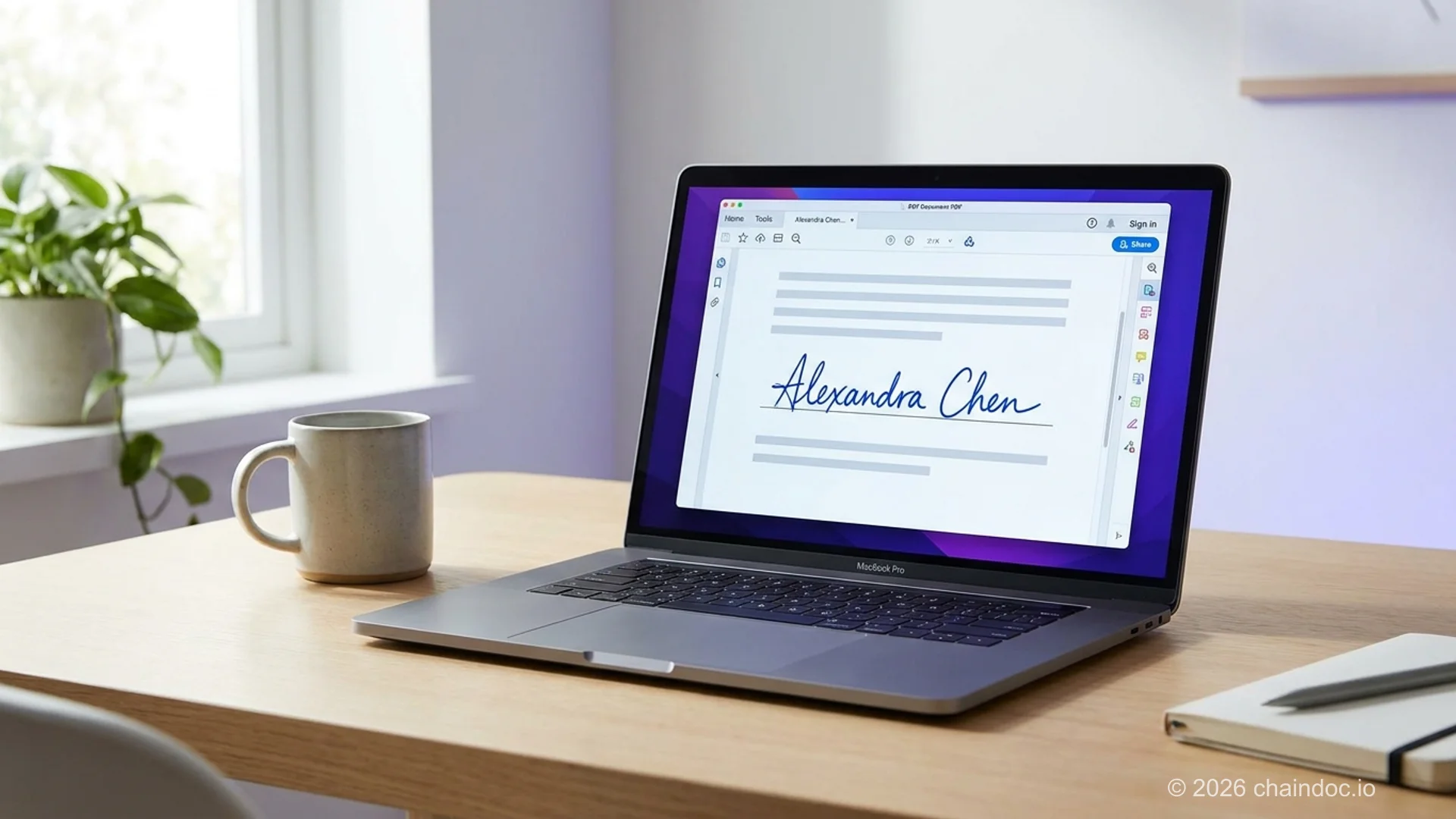
The same signature can be applied to a document in Chaindoc, which turns it from an image into a signed file with an audit trail: signer, time, and proof the document hasn't changed since.
An image of a signature isn't a signed document
This is the part generators tend to leave out, and it's the part that decides whether your document holds up.
Anyone who receives your PNG can lift it onto another document. Nothing in the image records who applied it, when, or to what, so on its own it proves very little.
What carries weight is the record: the signer's authentication, a timestamp, and a document hash that shows nothing changed afterwards. eIDAS in the EU and the ESIGN Act in the US both point at that evidence rather than at how the mark looks.
Internal forms, a delivery note, an email signature block, a document nobody will dispute. Plenty of paperwork never needs more than a legible mark, and pretending otherwise wastes your time.
Anything you'd be unhappy to argue about later: contracts, invoices, employment paperwork, anything with a payment attached. For those, sign the document rather than decorate it, and keep the verification report with the file.

Create your signature, then use it on a document
Draw or type it once and keep it in your account. When a document needs signing, apply the same signature and get a file with a trail behind it.
Common questions about creating a signature
What the image does, what it doesn't, and where to use it. More at our support page.
On its own, no. A PNG of your handwriting is a picture: anyone who receives it can copy it onto another document, and nothing records who applied it or when. What carries legal weight is the evidence around the signature, meaning the signer's authentication, a timestamp and a record of the document as it was signed. That's the difference between pasting an image into a PDF and signing the PDF in Chaindoc.
A generator produces the visual. An electronic signature is the legal act, and it needs an audit trail: who signed, when, from where, and proof the file hasn't changed since. Chaindoc does both, which is why the signature you create here can be applied to a real document rather than just downloaded.
Yes. The file comes with a transparent background, so it sits on a document without a white box around it. In Word use Insert, then Pictures; in Gmail put it in your signature block; in a PDF form drop it into the signature field. Bear in mind that in all three cases you're placing an image, not signing cryptographically. Our guide to signing a PDF works through every method.
You need a Chaindoc account, and the free tier covers creating and storing your signature. The reason it isn't anonymous is the same reason the signature is worth anything later: a stored signature belongs to a verified identity, so when you apply it to a document there's something to point at.
Your signature is saved to your account so you don't redraw it for every document, and you can replace or delete it whenever you like. Documents you already signed keep the signature that was applied at the time, because changing a signature retroactively would break the audit trail that makes it evidence.
Signature guides and resources
How to sign, what makes a signature hold up, and how to check one that arrives from somebody else.